For students ages 11–14
The Middle Years Programme (MYP) is for students aged 11–14. It builds creative, critical, and reflective thinkers.
Language Acquisition
Language & Literature
Individuals & Societies
Sciences
Mathematics
Arts
Physical & Health Education
Design
Teachers teach within their subjects and across them, always centering their units around a concept, global context and lens. Across all classes, students learn how to learn and take part in service as action.
Each subject group has at least 50 hours of teaching time per year. In the final two years, there is planned flexibility so students can meet local requirements and personal goals.
Year 3 – Community Service Project: small teams plan and carry out a service project.
Year 5 – Personal Project: an independent project that showcases skills, interests, and growth.
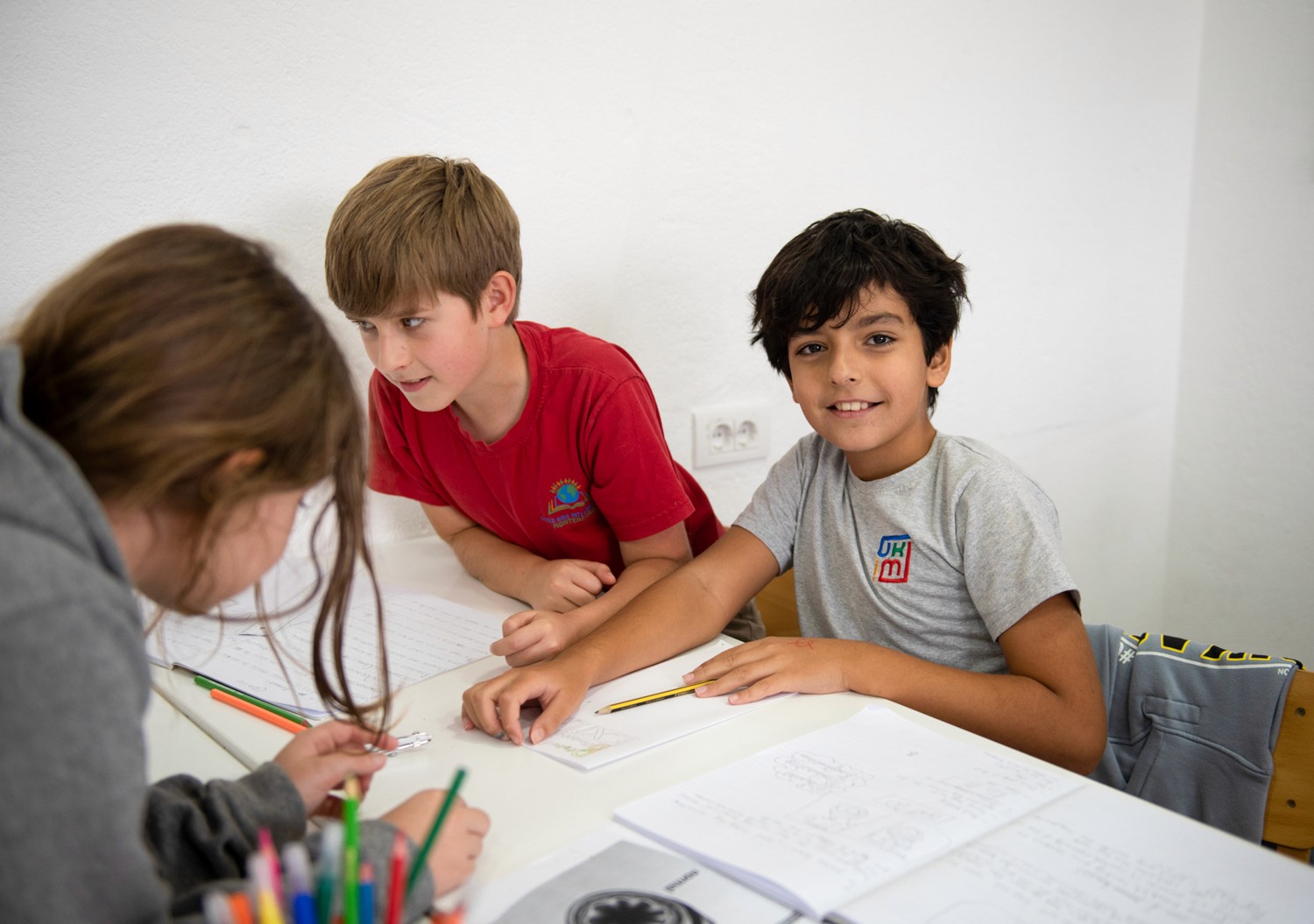
Strong guidance through the early teen years
Opportunity to try new subjects and arts and sport clubs
Emphasis on study skills, organisation and wellbeing
Smooth pathway to High school (IGCSE & International A Levels)
The International Baccalaureate (IB) is a global, non-profit leader in international education. It develops students who are inquisitive, knowledgeable, confident, and caring. IB programmes pair strong academics with personal growth, encouraging learners to excel in class and contribute to their communities.
IB schools are known for high teaching standards and clear expectations. Lessons connect subjects, build critical thinking, and grow the skills students need to live and work in a fast-changing world. The goal is resilient, self-motivated young people with purpose.
Each of the IB’s programs is committed to the development of students according to the IB Learner Profile.
*Only schools authorized by the IB Organization can offer any of its four academic programmes: the Primary Years Programme (PYP), the Middle Years Programme (MYP), the Diploma Programme, or the Career-related Programme (CP). Candidate status gives no guarantee that authorization will be granted. For further information about the IB and its programmes, visit www.ibo.org
The profile aims to develop learners who are:
Inquirers
Knowledgeable
Thinkers
Communicators
Principled
Open-minded
Caring
Risk-takers
Balanced
Reflective
MYP assessment standards are consistent around the world and are a criterion-related assessment model. Our teachers structure varied continuous assessment tasks so that learners can demonstrate achievement according to the objectives defined by the IB.
The recording and reporting of individual levels of achievement are organized in ways that provide students with detailed feedback on their progress as it relates to the assessment criteria for each subject group.
Tasks are assessed against established criteria, not against the work of other students. These include:
Open-ended, problem-solving activities and investigations
Organized debates
Tests and examinations
Hands-on experimentation
Analysis and reflection